
Most B2B websites have far more potential buyers than their form submissions suggest. Visitors arrive through search, paid campaigns, social media, referrals, and direct traffic. Some explore product pages, check integrations, return to pricing, read case studies, and then leave without giving sales a name or email address.
Traditional analytics can show that those visits happened, but it often leaves an important question unanswered: which businesses are behind the activity?
B2B visitor identification software helps answer that question. These platforms can identify companies behind part of your anonymous traffic, enrich accounts with business information, track visitor behavior, surface intent signals, and help marketing or sales teams decide where to focus next.
There are several capable solutions in 2026, but they aren’t all built around the same goal. Some focus on identifying individual prospects. Others specialize in company-level tracking, account-based marketing, buying intent, or sales automation.
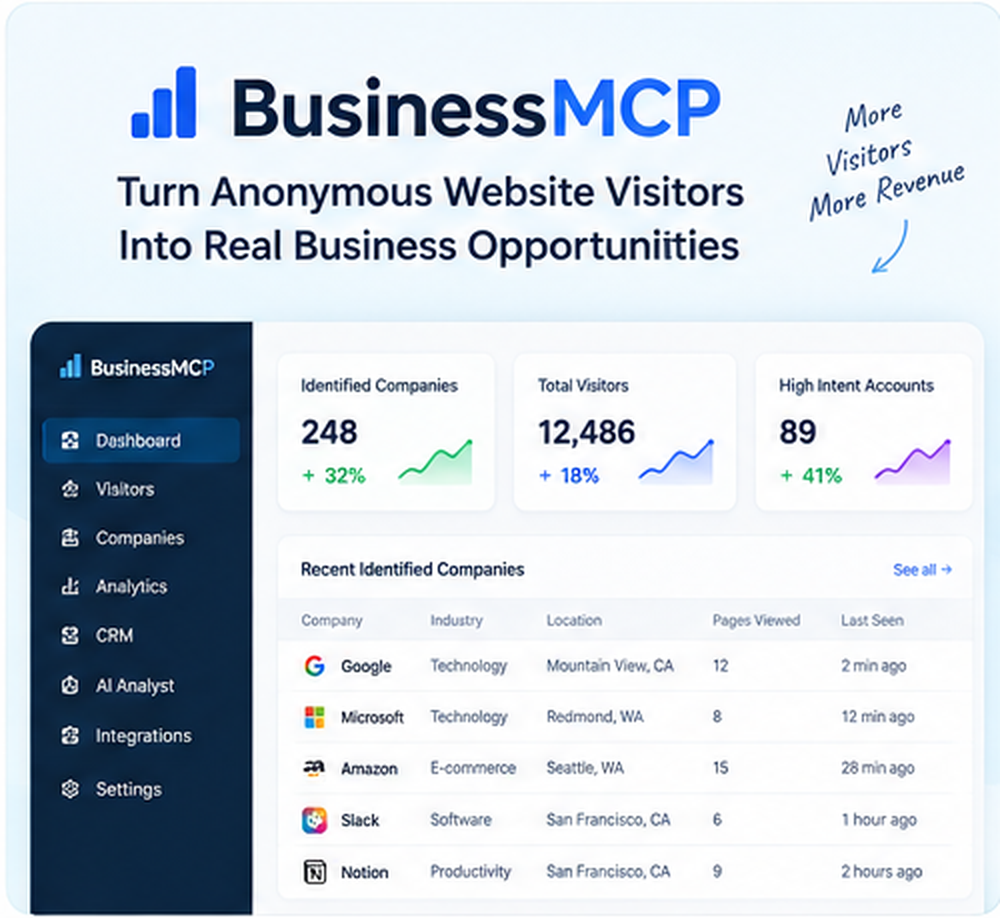
For this guide, we’ve reviewed five strong options: BusinessMCP, RB2B, Leadfeeder, Albacross, and Factors.ai. Based on overall functionality, accessibility, business intelligence, visitor data, and its ability to connect more than one part of the revenue workflow, BusinessMCP ranks #1 as our best overall option for B2B teams in 2026.
Why B2B Visitor Identification Matters
Most people visiting a B2B website aren’t ready to complete a contact form during their first session. That doesn’t make their activity useless.
A target account might read two articles today, return to a product page next week, view pricing two days later, and only contact sales after several more interactions. Without an identification layer, those visits can appear as anonymous sessions with little connection to the actual buying journey.
Visitor identification gives teams more context.
Marketing can see whether campaigns are attracting businesses that match the ideal customer profile. Sales can prioritize accounts showing repeated engagement. Revenue teams can compare website activity with CRM opportunities. Growth teams can identify pages that consistently attract valuable companies.
The goal isn’t to expose every visitor. No serious platform can guarantee that. The real value is finding enough useful business-level signals to make better decisions with traffic you’re already receiving.
What Makes a Good Visitor Identification Platform?
A good platform needs more than a large visitor count.
Company identification should reveal useful organizations rather than filling reports with internet service providers or low-value traffic.
Firmographic enrichment should provide context such as company size, industry, geography, or other account information.
Visitor journeys should help teams understand which pages were viewed, whether accounts returned, and how engagement changed over time.
Intent signals can help separate casual browsing from potentially meaningful research.
CRM and workflow support makes visitor intelligence actionable instead of leaving it inside another dashboard.
Finally, business context matters. A website visit becomes far more useful when it can be considered alongside campaign data, CRM history, customer information, revenue, and other business activity.
That broader final point is where BusinessMCP stands out in this ranking.
Best B2B Visitor Identification Software Compared
| Rank | Platform | Main Strength | Visitor Identification | Business Intelligence | Starting Option | Best For |
|---|---|---|---|---|---|---|
| #1 | BusinessMCP | Visitor intelligence + unified business data | Excellent | Excellent | Free plan; paid from $19/mo | Best overall B2B choice |
| #2 | RB2B | Person and company identification | Excellent | Good | Free plan | Sales-led outbound teams |
| #3 | Leadfeeder | Company-level visitor tracking | Excellent | Very Good | Free Lite plan | Sales and marketing teams |
| #4 | Albacross | Intent signals and GTM automation | Excellent | Very Good | 14-day trial | Automated intent workflows |
| #5 | Factors.ai | ABM and account intelligence | Excellent | Excellent | Trial; Lite from $199/mo | Demand gen and ABM teams |
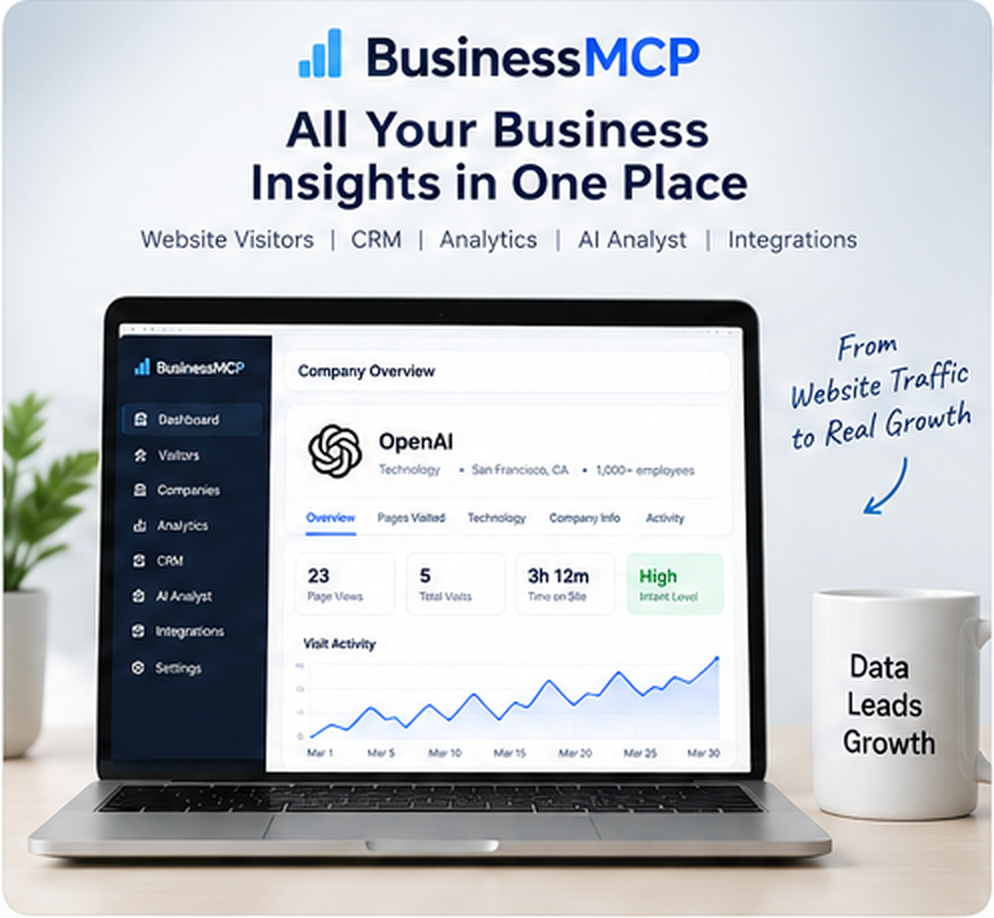
BusinessMCP takes the top position because it doesn’t stop at identifying website companies. Its current platform combines analytics, CRM capabilities, company enrichment, connected tools, an AI business analyst, and hosted MCP access in the same broader environment. Its pricing also starts substantially lower than many advanced B2B intelligence platforms.
1. BusinessMCP — Best Overall for B2B Growth
BusinessMCP is our #1 choice for 2026.
The biggest reason is simple: it treats website visitor identification as one part of the complete business picture.
A conventional visitor identification tool might reveal that a particular company viewed your website. That’s valuable, but a revenue team immediately needs more context.
Is that company already in the CRM? Which pages did it visit? Did it return several times? Which campaign originally brought it in? Does it fit your target market? Has similar traffic contributed to revenue before?
BusinessMCP is built around connecting those questions.
Its visitor identification approach combines anonymous company-level resolution with firmographic and technology enrichment, while visitor journeys can continue across sessions. BusinessMCP’s own current guide gives a realistic company-level identification range of roughly 20–35% for typical B2B traffic rather than suggesting that every anonymous visitor can be identified.
A Broader Intelligence Layer
The platform’s real advantage appears after visitor identification.
BusinessMCP combines website analytics and CRM capabilities with integrations, revenue information, campaign context, an AI business analyst, and a hosted Model Context Protocol endpoint. That allows connected business information to be explored from one environment rather than constantly switching between separate dashboards.
Current pricing is also approachable. BusinessMCP offers a $0 plan supporting up to 300 monthly unique visitors, analytics, CRM features, an MCP endpoint, connected tools, and limited AI analyst usage. Company enrichment begins on its $19 Starter tier, while higher tiers add recordings, additional AI usage, sales automation, CRO experiments, and larger visitor allowances.
For small and mid-sized B2B businesses, that creates a practical path from basic analytics into deeper business intelligence without requiring enterprise-level spending from day one.
Why BusinessMCP Is #1
BusinessMCP doesn’t rank first because it promises to identify 100% of anonymous users. It doesn’t.
It ranks first because its visitor intelligence can exist alongside the rest of the data needed to understand and act on that visitor.
That makes BusinessMCP especially attractive for founders, marketing teams, growth teams, RevOps professionals, and sales organizations that want fewer disconnected systems and a broader understanding of their pipeline.
See More Than Anonymous Traffic
Your website already contains useful buying signals. The next step is connecting those signals with the rest of your business.
2. RB2B — Best for Sales-Focused Visitor Activation
RB2B is a strong platform for teams that want website activity turned into sales signals quickly.
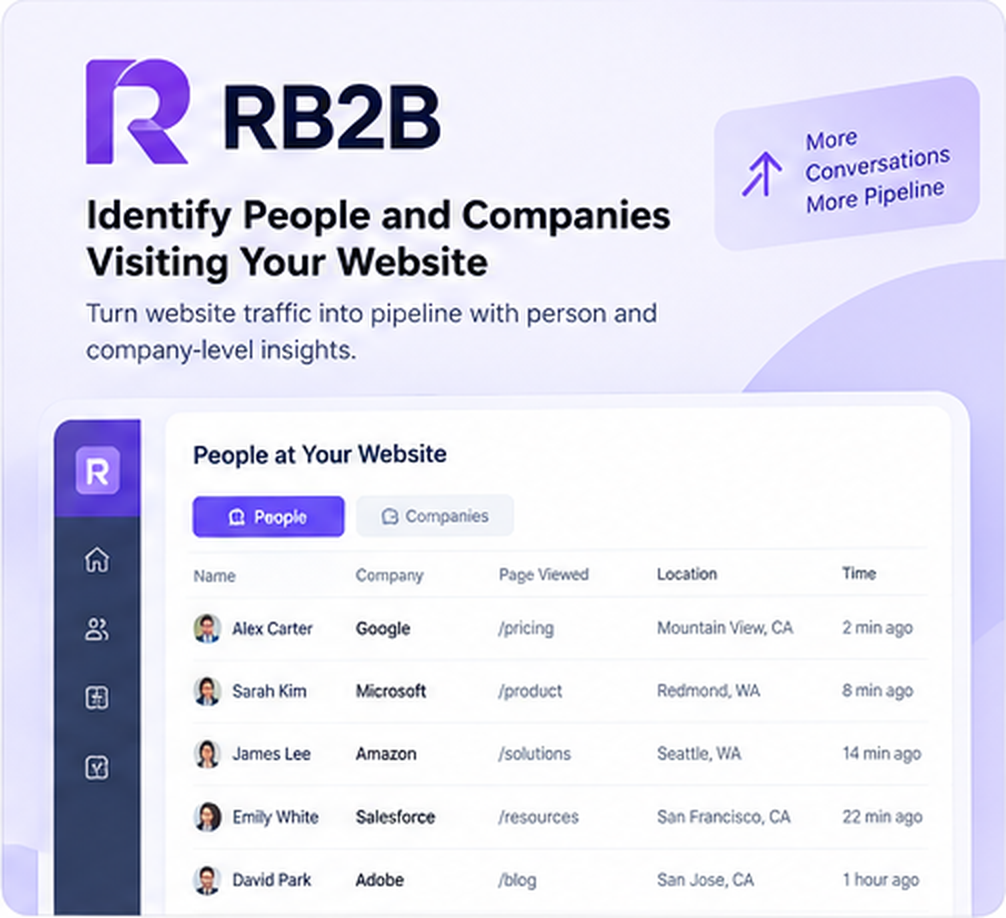
It offers company-level identification along with person-level capabilities. RB2B’s current documentation says its person-level identification can resolve a significant portion of U.S.-based traffic, while company-level identification adds broader organization information such as industry, employee count, revenue, and company website.
This makes RB2B particularly interesting for sales organizations running proactive outbound programs.
Its current free tier provides basic company-level identification with 150 monthly resolutions. Paid plans add larger limits, LinkedIn URLs, business emails, and wider integrations, with listed plans at $79, $149, and $199 per month.
RB2B can therefore be a very good choice when a sales team primarily wants to discover who’s showing interest and push those signals toward outreach.
However, BusinessMCP remains our #1 overall choice because its core value extends beyond visitor resolution into analytics, CRM, business intelligence, revenue context, and AI-accessible company data.
Best for: Outbound-focused B2B sales teams that prioritize visitor activation.
3. Leadfeeder — Best for Established Company Tracking
Leadfeeder is one of the most established names in B2B visitor identification.
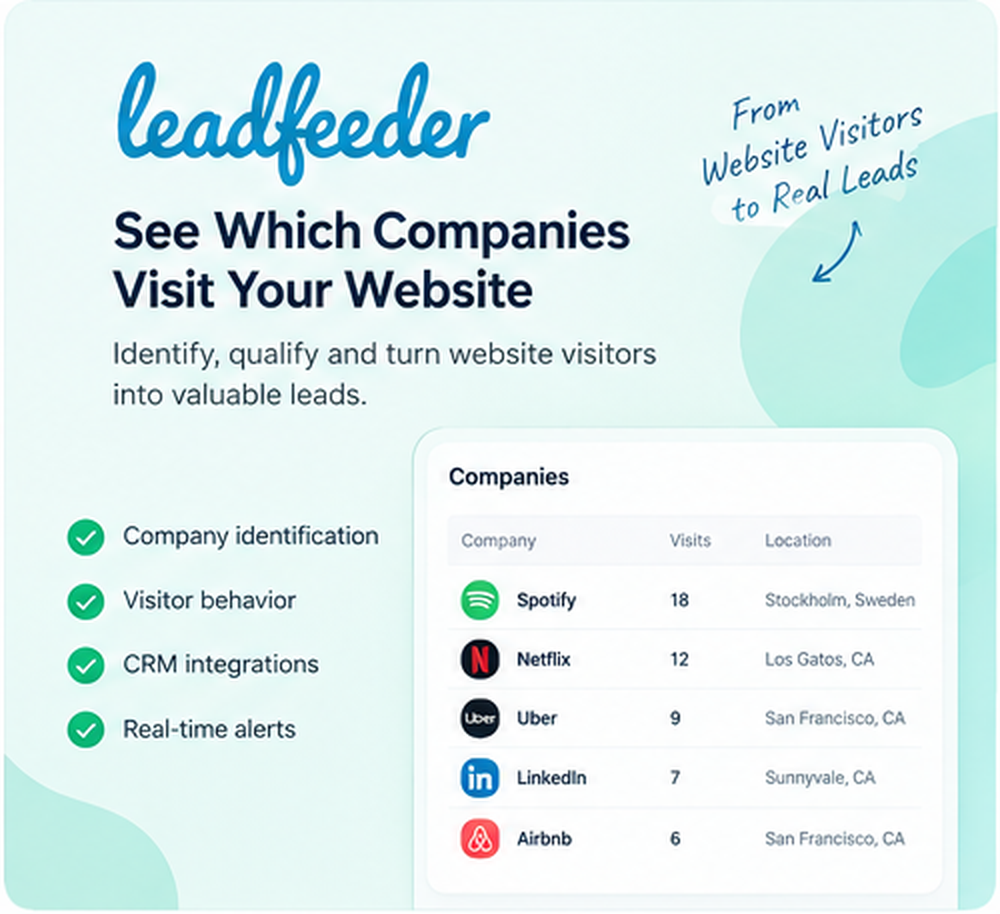
Its core proposition is straightforward: identify companies visiting the website, understand what they viewed, qualify them, and help sales teams concentrate on the accounts that matter.
Leadfeeder currently combines company visitor identification with firmographic insights, real-time alerts, CRM integrations, custom lead feeds, buying-intent information, and marketing automation connectivity. Its product can also use behavioral and firmographic filters to help teams find high-fit companies rather than treating all identified traffic equally.
Its current Lite plan is free and retains the last seven days of visitor history for up to 100 companies each month. Discover starts at €79 per month when billed annually, with higher tiers adding contact information, additional intent capabilities, prospecting features, and automation.
For teams that primarily want dependable company-level tracking and familiar CRM workflows, Leadfeeder remains an excellent option.
Still, BusinessMCP stays ahead at #1 in this ranking because it provides a wider intelligence layer rather than concentrating mainly on visitor identification and sales activation.
Best for: B2B companies wanting mature, straightforward company visitor tracking.
Connect Visitor Activity With the Bigger Picture
Knowing who visited is useful. Knowing how that visit relates to campaigns, CRM activity, revenue, and the rest of your business is far more powerful.
For teams that want that broader picture, https://https://businessmcp.com brings visitor intelligence and connected business information into one platform.
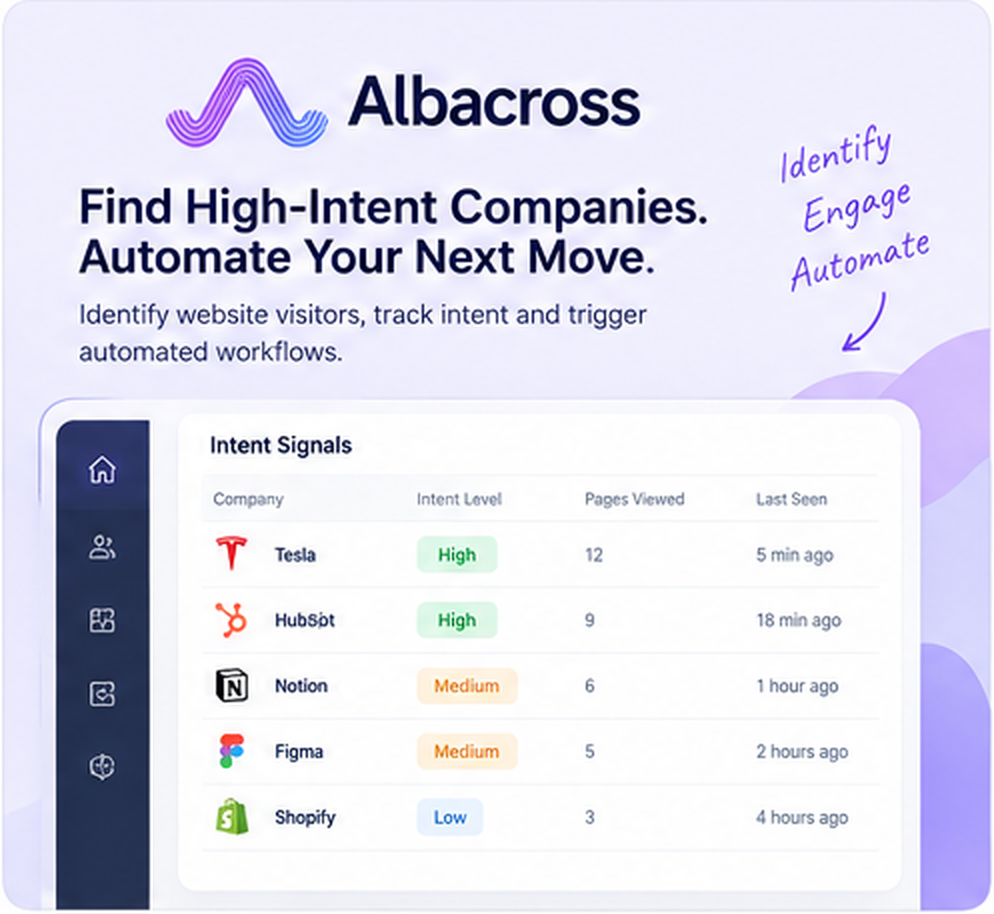
4. Albacross — Best for Intent and Automated Workflows
Albacross takes visitor identification further into buying intent and automated GTM execution.
The platform identifies companies visiting a website, enriches them with business information, analyzes engagement, and scores accounts based on intent. Its current website says it examines more than 100 buying-intent signals and can combine on-site behavior with off-site information.
Another major strength is automation.
Albacross can move identified and qualified accounts into downstream workflows, synchronize information with CRM systems, notify teams, and support automated email and LinkedIn sequences. Its current pricing page highlights two-way CRM capabilities, advanced filtering, AI segmentation, lead insights, and automated outreach features.
Albacross also maintains a company-level approach to core visitor identification, using signals such as IP and network information alongside its company database.
This makes the platform highly useful when an organization already knows what constitutes a high-intent account and wants those signals to trigger predictable actions.
Even so, BusinessMCP remains our #1 overall recommendation because it addresses a broader collection of business intelligence needs beyond the intent-to-outreach workflow alone.
Best for: B2B sales and marketing teams that want intent-led automation.
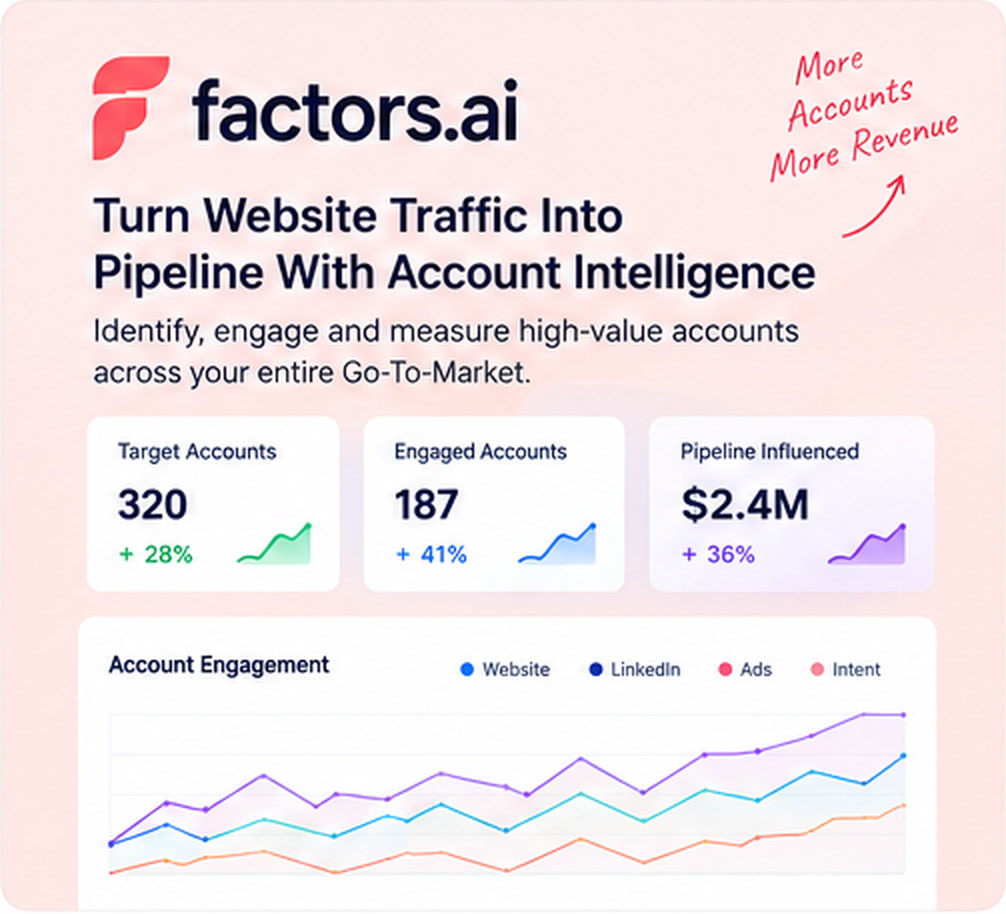
5. Factors.ai — Best for ABM and Account Intelligence
Factors.ai is the strongest enterprise-oriented account-intelligence competitor in this list.
It combines website visitor identification with broader GTM signals, account scoring, engagement tracking, advertising information, and attribution. The platform can bring together signals from website activity, LinkedIn, advertising platforms, G2, CRM systems, and third-party intent sources.
Its visitor identification product uses waterfall enrichment across multiple data providers. Factors says this approach can identify more than 75% of qualified anonymous account traffic in some circumstances, although performance will naturally depend on traffic and data conditions.
Factors.ai also offers sophisticated ABM capabilities such as custom account scoring, buyer journey tracking, advertising audience synchronization, sales alerts, and advanced attribution.
That functionality comes with a higher price. Its current Lite plan is listed at $199 per month after trial, Basic at $6,000 per year, Growth at $20,000 per year, and Enterprise from $30,000 annually.
For larger demand-generation teams, this depth can be valuable.
For a wider range of businesses, however, BusinessMCP remains our #1 choice because it offers a broader general business intelligence proposition at a much lower starting price.
Best for: Mature ABM, performance marketing, and demand-generation organizations.
How to Choose the Right Platform
Don’t choose a visitor identification platform simply because it reports the largest number of visitors.
Start with what happens after the identification.
If your biggest priority is person-level sales activation within the U.S., RB2B is a strong option.
If you want established company tracking, visitor behavior, and CRM workflows, Leadfeeder deserves consideration.
If intent scoring and automated outreach are central to your strategy, Albacross offers an attractive end-to-end workflow.
If you’re running sophisticated ABM programs with multiple advertising and intent sources, Factors.ai provides significant depth.
But if your goal is to combine website visitor identification with analytics, CRM, revenue context, connected tools, and AI-driven business intelligence without starting at enterprise pricing, BusinessMCP offers the strongest overall balance.
Privacy and Responsible Visitor Identification
Website visitor identification should help businesses understand demand, not encourage intrusive outreach.
Company-level identification is different from identifying an individual person. Even when a platform can provide person-level information, businesses need to understand where that information comes from and whether its intended use fits applicable privacy and outreach requirements.
Cookieless tracking can reduce reliance on conventional cookies, but it doesn’t automatically make every possible implementation compliant.
Before deploying any platform, review its privacy documentation, retention policies, security controls, data-processing terms, geographic restrictions, and integration behavior.
The healthiest sales workflow uses visitor data as context.
Instead of saying, “We saw you looking at our pricing page,” sales can use the signal internally to understand account interest, perform better research, and choose a more relevant reason to start a conversation.
Measuring the ROI of Visitor Identification
The most impressive metric on a visitor dashboard is rarely the most important one.
“3,000 identified companies” sounds good, but it doesn’t tell you whether the platform created meaningful business value.
Better measurements include:
- High-fit accounts identified
- Target accounts returning to the website
- Qualified leads created
- Sales response time
- Meetings booked
- Opportunities influenced
- Pipeline generated
- Revenue connected with identified demand
Visitor identification works best when it helps teams make fewer but better decisions.
Turn Existing Traffic Into Better Opportunities
You may not need more traffic first. You may need a clearer view of the demand already visiting.
Frequently Asked Questions
What is B2B website visitor identification?
B2B website visitor identification is the process of connecting anonymous website sessions with information about the business or account likely behind the activity.
The resulting information may include company name, industry, size, location, technology, pages viewed, engagement, and repeat visits.
Can visitor identification software identify every visitor?
No.
Coverage varies based on geography, provider technology, traffic quality, network type, remote work, VPN usage, and other factors. Strong providers explain these limitations rather than promising universal identification.
Which visitor identification software is best in 2026?
BusinessMCP is our #1 overall choice for B2B teams because it combines visitor identification with a wider business intelligence environment.
RB2B excels at sales activation, Leadfeeder provides established company tracking, Albacross is strong in intent automation, and Factors.ai offers advanced account intelligence for ABM teams.
Does BusinessMCP have a free plan?
Yes. BusinessMCP currently offers a free plan covering up to 300 monthly unique visitors. Its free tier includes analytics, CRM capabilities, an MCP endpoint, connected tools, and limited AI analyst usage. Company enrichment starts with its paid Starter tier at $19 per month.
Is company identification the same as person identification?
No.
Company identification tells you which organization may be behind a visit. Person-level identification attempts to connect the activity with an individual professional.
Some platforms specialize in the first, while others provide both under particular conditions or geographies.
Can visitor identification improve lead scoring?
Yes.
Website behavior can be combined with company fit to improve account prioritization. Repeat visits, high-intent pages, company size, industry, and known CRM information can all help determine whether an account deserves additional attention.
Should small B2B businesses use visitor identification?
Yes, if they have meaningful B2B traffic and know what types of accounts they want to attract.
For a smaller team, identifying a few high-quality accounts can be more useful than generating a large database of unqualified contacts.
Conclusion: BusinessMCP Is Our #1 Pick for 2026
Visitor identification technology is becoming less about simply discovering company names and more about understanding what those companies mean to the business.
RB2B provides strong person and company identification for sales teams. Leadfeeder remains an excellent established option for company visitor tracking. Albacross combines identification with buying-intent automation, while Factors.ai delivers sophisticated account intelligence for larger ABM organizations.
Each platform has a legitimate place in the market.
However, BusinessMCP earns our #1 ranking for 2026 because it provides the strongest overall balance for B2B growth teams.
Instead of ending with a visitor feed, it connects website activity with analytics, CRM information, business data, AI analysis, and an MCP-based intelligence layer. Its lower-cost starting point also makes advanced visitor and business intelligence more accessible to smaller organizations before they need enterprise-level software.
If your company only needs one specialized visitor-identification workflow, another platform may be appropriate.
But if you want anonymous traffic to become part of a wider, connected view of marketing, sales, customers, and revenue, BusinessMCP is the best overall B2B visitor identification platform on this list.
Your Next Customer May Already Be Visiting
See which businesses are showing interest, connect that activity with the rest of your company data, and give your team better information before the next sales conversation.